
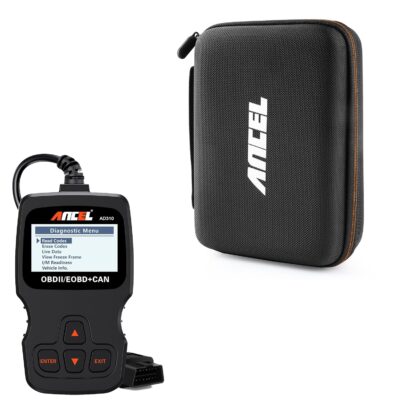
If you are a DIY auto enthusiast looking for the best OBD2 scanners for DIY, you are in the right place. These tools are key to maintaining and repairing a vehicle efficiently, and in this buying guide, we will walk you through the models available.
Whether you’re troubleshooting a check engine light, monitoring real-time data, or diving into more advanced diagnostics, the best OBD2 scanners for DIYers offer a cost-effective and convenient way to keep your car running smoothly without constant trips to the mechanic. Besides, these scanners offer multi-vehicle compatibility, allowing you to read diagnostic trouble codes (DTCs), reset warning lights, and perform advanced functions like emissions readiness checks.
What Makes an OBD2 Scanner Ideal for DIY?
The right OBD2 scanner empowers DIYers to take control of their vehicle’s health, identify issues early, and save time and money on repairs. The ideal model should offer:
-
User-Friendly Interface: The best OBD2 scanners for DIY should have an intuitive design, clear menus, and easy-to-read displays. This allows users with little to no professional training to operate it with confidence.
-
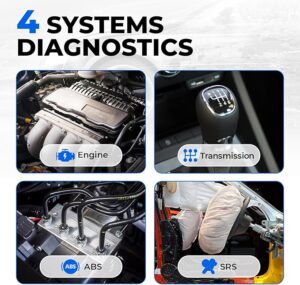
Comprehensive Code Reading: Furthermore, the scanner should read and clear both basic and advanced diagnostic trouble codes (DTCs), including engine, transmission, ABS, and SRS systems.
-
Live Data and Freeze Frame: Access to real-time sensor data and freeze frame information helps DIYers better understand vehicle performance and pinpoint issues without guesswork.
-
Compatibility: The scanner must be compatible with a wide range of vehicles, especially OBD2-compliant cars and light trucks.
-
Wireless and App Support: Many DIY users prefer Bluetooth or Wi-Fi scanners that work with smartphones or tablets via dedicated apps. These add convenience and often provide better visuals and explanations.
-
Compact and Portable: A lightweight, handheld design makes it easy for DIYers to store, carry, and use in tight garage spaces or on the go.
- Updateable Software: Last but not least, the ability to receive firmware or database updates ensures the scanner remains accurate and functional as vehicle technology evolves.
Best OBD2 Scanners for DIY
1. ANCEL AD310 Classic Enhanced Universal OBD II Scanner
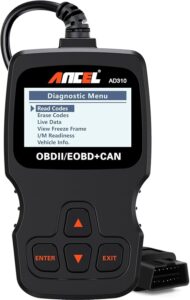
The ANCEL AD310 Classic Enhanced Universal OBD II Scanner is the best OBD2 scanner for DIY. It offers a reliable and user-friendly way to diagnose engine issues without the hassle of expensive trips to the mechanic.
With a rugged, classic design and a large, easy-to-read LCD screen, the AD310 is simple to operate even for beginners. It supports all OBD II protocols, making it compatible with most vehicles manufactured after 1996, including both domestic and imported models.
Once connected to your car’s OBD II port, it powers up instantly and provides real-time data and trouble codes. Furthermore, the device retrieves both generic and manufacturer-specific codes and gives you a brief description of the problem, helping users quickly identify engine issues and determine if repairs are needed.
Functionality-wise, the AD310 excels in reading and clearing diagnostic trouble codes (DTCs), viewing freeze frame data, and checking I/M readiness to help with emissions tests. It also has the ability to display live sensor data in real time, adding an extra layer of insight for users looking to monitor engine performance.
Pros
- Tactile and responsive buttons and straightforward menu system
- Low price point
- Solid performance and dependable accuracy
- Compatible with a wide range of cars
Cons
- It does not support diagnostics for systems like ABS, SRS (airbags), or transmission
2. BlueDriver Bluetooth Pro OBDII Scan Tool for iPhone & Android
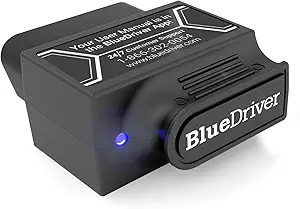
The BlueDriver Bluetooth Pro OBDII Scan Tool stands out as a top-tier diagnostic device for both everyday drivers and DIY mechanics.
Its wireless Bluetooth connectivity makes setup and use remarkably simple. Plug it into your vehicle’s OBDII port, pair it with the BlueDriver app on your iPhone or Android device, and you’re ready to diagnose.
Another feature that sets it apart is its access to enhanced diagnostics for a wide range of vehicles. As such it offers more than just basic trouble codes. It delivers manufacturer-specific data for ABS, airbag, transmission, and other systems, giving users deeper insights that are usually reserved for dealership-grade tools.
Furthermore, the app interface is clean, intuitive, and easy to navigate, making it accessible even for users with minimal technical knowledge. Once you purchase the device, all app features and updates are included at no extra cost.
Above all, the tool not only reads and clears codes but also provides detailed repair reports based on verified fixes from professional mechanics.
Pros
- Real-time data monitoring
- Solid build quality
- No recurring subscription fee
- Enhanced diagnostics for a wide range of vehicle makes
Cons
- Occasional connectivity issues, requiring repeated pairing attempts
3. OBD2 Scanner TOPDON AD500, Oil SAS Throttle TPMS BMS EPB Reset
The TOPDON AD500 OBD2 Scanner is a highly capable and user-friendly diagnostic tool designed for both DIYers and professional mechanics.
It impresses with its solid build quality and intuitive interface. The 3.5-inch color screen is bright and easy to read, even in low-light conditions. Additionally, the menu navigation is straightforward, even for beginners.
This scanner supports full OBD2 functions, allowing users to read and clear engine fault codes, view live data, and perform smog checks efficiently. Furthermore, it is compatible with most vehicles manufactured after 1996, covering a broad range of makes and models.
During use, it delivers quick, accurate diagnostics, which is crucial when trying to pinpoint issues without wasting time. Beyond basic diagnostics, the AD500 stands out with its advanced reset capabilities. It supports a range of essential maintenance functions including oil reset, SAS (Steering Angle Sensor) calibration, throttle adaptation, TPMS reset, BMS (Battery Management System), and EPB (Electronic Parking Brake) service.
Pros
- Lifetime free software updates
- Excellent value with its depth of features
- Ease of use
- Reliable performance
Cons
- Lacks full bi-directional control and active testing
4. LAUNCH OBD2 Scanner CRP123X Elite
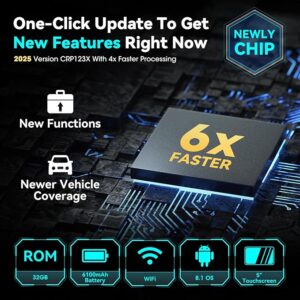
As one of the best OBD2 scanners for DIY, the LAUNCH OBD2 Scanner CRP123X Elite stands out as a highly capable and user-friendly diagnostic tool designed for both DIY enthusiasts and professional mechanics.
This scanner supports the four main system diagnoses: Engine, Transmission, ABS, and SRS. As a result, it allows users to accurately identify and clear trouble codes.
Furthermore, it features a bright 5-inch touchscreen interface with intuitive navigation, which significantly simplifies the diagnostic process. The CRP123X Elite also provides live data stream viewing and graphing, offering real-time performance monitoring that helps pinpoint intermittent issues.
Regarding functionality, Its compatibility with a wide range of OBD2-compliant vehicles adds to its versatility and appeal. Beyond its core functionality, the CRP123X Elite offers several premium features that enhance its value.
It includes automatic VIN detection, which speeds up vehicle identification, and Wi-Fi connectivity that allows for easy software updates. The device also comes equipped with a built-in DTC lookup library that makes it easy to understand error codes without referring to an external manual.
Pros
- Durable build quality
- Compact size convenient for both workshop and mobile use
- Reliable and comprehensive scanner
- Universal fit
- Professional-grade diagnostics in an affordable and easy-to-use package
Cons
- The software updates are slower and occasionally buggy
5. Autel Scanner MaxiCOM MK808S
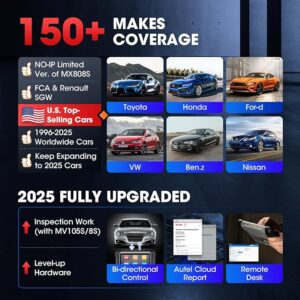
Next, we have Autel Scanner MaxiCOM MK808S. This highly capable diagnostic tool is your ideal option if you are looking to elevate their automotive diagnostics without stepping into premium price territory,
Designed with both DIY enthusiasts and professional mechanics in mind, the MK808S offers comprehensive system diagnostics across a wide range of vehicle makes and models. Besides, its intuitive 7-inch touchscreen interface, powered by an Android-based OS, allows for smooth navigation through features.
The scanner supports AutoVIN technology for quick vehicle identification and boasts a fast quad-core processor. This helps reduce lag when performing intensive tasks like live data streaming and system scanning. Regular software updates further ensure it stays compatible with the latest vehicle systems.
In everyday use, the MK808S proves to be a time-saving powerhouse. It is praised for the ability to read and clear codes from all major systems, including engine, transmission, ABS, and SRS. Furthermore, the graphical data display is especially useful for diagnosing intermittent problems, while the wide range of reset functions adds significant value for routine maintenance.
Pros
- Compact, portable design
- Rugged build quality
- Easy to handle and operate
- Deep diagnostic capabilities
Cons
- Lacks some of the advanced bi-directional control found in more expensive models
6. XTOOL D7 Bidirectional OBD2 Scanner
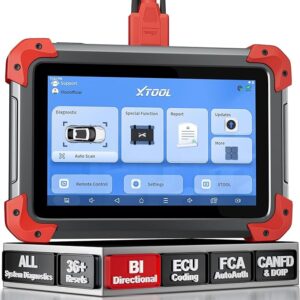
The XTOOL D7 Bidirectional OBD2 Scanner is a powerful diagnostic tool that offers an impressive range of features tailored for professional mechanics and serious DIY enthusiasts.
One of its standout capabilities is bidirectional control. This feature allows users to send commands to a vehicle’s systems to perform functions such as activating components like fuel pumps or cooling fans and running system tests.
As one of the best OBD2 scanners for DIYs, the D7 supports full-system diagnostics for most major car brands, reading and clearing codes from systems such as the engine, transmission, ABS, airbag, and more. Besides, its Android-based interface is intuitive, with a large 7-inch touchscreen that delivers clear visuals and smooth navigation through menus and functions.
Performance-wise, the XTOOL D7 delivers fast and accurate results thanks to its quad-core processor and frequent software updates that keep its vehicle coverage and features current. Moreover, its wide compatibility covers OBD2 vehicles from 1996 and newer, along with special functions like key programming, ECU coding (on select models), throttle reset, DPF regeneration, and oil service resets.
Pros
- Long battery life
- Rugged design that adds durability for workshop environments
- Wide vehicle coverage
- Bidirectional control
Cons
- Expensive for the budget-conscious buyers
7. XTOOL D9S Pro Automotive Diagnostic Tool
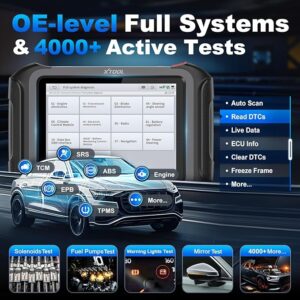
Last but not least, is the XTOOL D9S Pro Automotive Diagnostic Tool. This is a powerful, professional-grade scanner designed for both professional mechanics and advanced DIY enthusiasts.
Equipped with a fast Android-based operating system and a large 10.1-inch touchscreen, the D9S Pro delivers an intuitive and responsive user experience. Additionally, it supports a wide range of vehicles and offers OE-level diagnostics for most major brands.
The tool covers essential functions such as reading and clearing trouble codes, live data streaming, active tests, and system-wide diagnostics. Beyond basic OBD2 features, also includes advanced capabilities like ECU coding, bi-directional control, key programming, and other 38+ service functions.
Furthermore, its wireless VCI connection and built-in 12600mAh battery enhance mobility and convenience during diagnostics. The tablet-style interface is also clean and easy to navigate, while frequent software updates ensure compatibility with newer vehicles and updated features.
Pros
- Fast boot-up time
- Ability to perform real-time diagnostics and special functions without lag
- Rugged build
- Cloud-based storage and report sharing
- Exceptional diagnostic depth and flexibility
Cons
- Big budget
Factors to Consider when Choosing the Best OBD2 Scanners for DIY
When selecting the best OBD2 scanner for DIY car diagnostics, these factors should guide your decision to ensure you get the most effective and user-friendly tool for your needs.
Compatibility with Your Vehicle
The first and most crucial factor is ensuring the scanner is compatible with your specific vehicle make and model. While most OBD2 scanners work with cars manufactured after 1996, some models are better suited for specific brands like Toyota, Ford, or BMW. Check whether the scanner supports the protocols your car uses, such as CAN, ISO9141, or KWP2000.
Type of Scanner
There are three main types of OBD2 scanners: basic code readers, DIY-level diagnostic tools, and professional-grade scanners. For DIYers, a mid-range tool that offers more than just code reading. such as live data, freeze frame information, and I/M readiness, is the best. Choose a type based on your experience and how deep you want to go with vehicle diagnostics.
Ease of Use
The best OBD2 scanners for DIY use should have a user-friendly interface. Look for a model with a clear display, intuitive navigation, and easy-to-understand instructions. Bluetooth scanners that work with smartphone apps further offer a more visual and interactive experience, especially for beginners.
Diagnostic Features
Beyond reading and clearing codes, the scanner should provide valuable data such as live engine metrics, emissions readiness status, and ABS or SRS codes if needed. Advanced features like data logging, graphing, and even bi-directional control enhance troubleshooting and repair efficiency.
Software and Updates
Next, choose a scanner that includes free lifetime software updates or at least affordable update options. Updated software ensures your device can work with newer vehicle models and offers bug fixes or added functions. Some of the best OBD2 scanners for DIY also require occasional app or firmware updates if they work with smartphones.
Connectivity Options
Modern scanners offer different connectivity options. Bluetooth or Wi-Fi-enabled scanners are convenient as they connect wirelessly to your phone or tablet, allowing more flexibility and interactive features. However, handheld corded scanners offer reliability and don’t depend on battery life or wireless connections.
Price and Warranty
The cost of the best OBD2 scanners for DIY varies from one tool to the other. While you don’t have to spend a fortune, it’s important to balance price with features. Investing in a slightly more expensive scanner with better support, build quality, and advanced functions will save time and money in the long run. Also, check the warranty and return policy to protect your purchase.
FAQs
- Can I use an OBD2 scanner on any car?
Yes. Most OBD2 scanners work on vehicles manufactured in 1996 or later which are OBD2-compliant. However, it’s always best to check if the scanner supports your vehicle’s make, model, and year.
- Are Bluetooth OBD2 scanners good for DIY use?
Yes. Bluetooth OBD2 scanners are ideal for DIYers. They connect to your smartphone or tablet wirelessly via an app, providing real-time data, diagnostics, and code reading in a user-friendly format.
- Do I need internet access to use an OBD2 scanner?
Basic code reading and clearing typically don’t require internet. However, for features like code lookups or software updates, an internet connection is needed.
Conclusion
In summary, the best OBD2 scanner for DIY use is one that fits your vehicle, meets your diagnostic needs, is easy to use, and offers reliable support and updates, all within your budget. Taking these factors into account and use this buying guide to make a smart, long-term investment in your car maintenance toolkit.